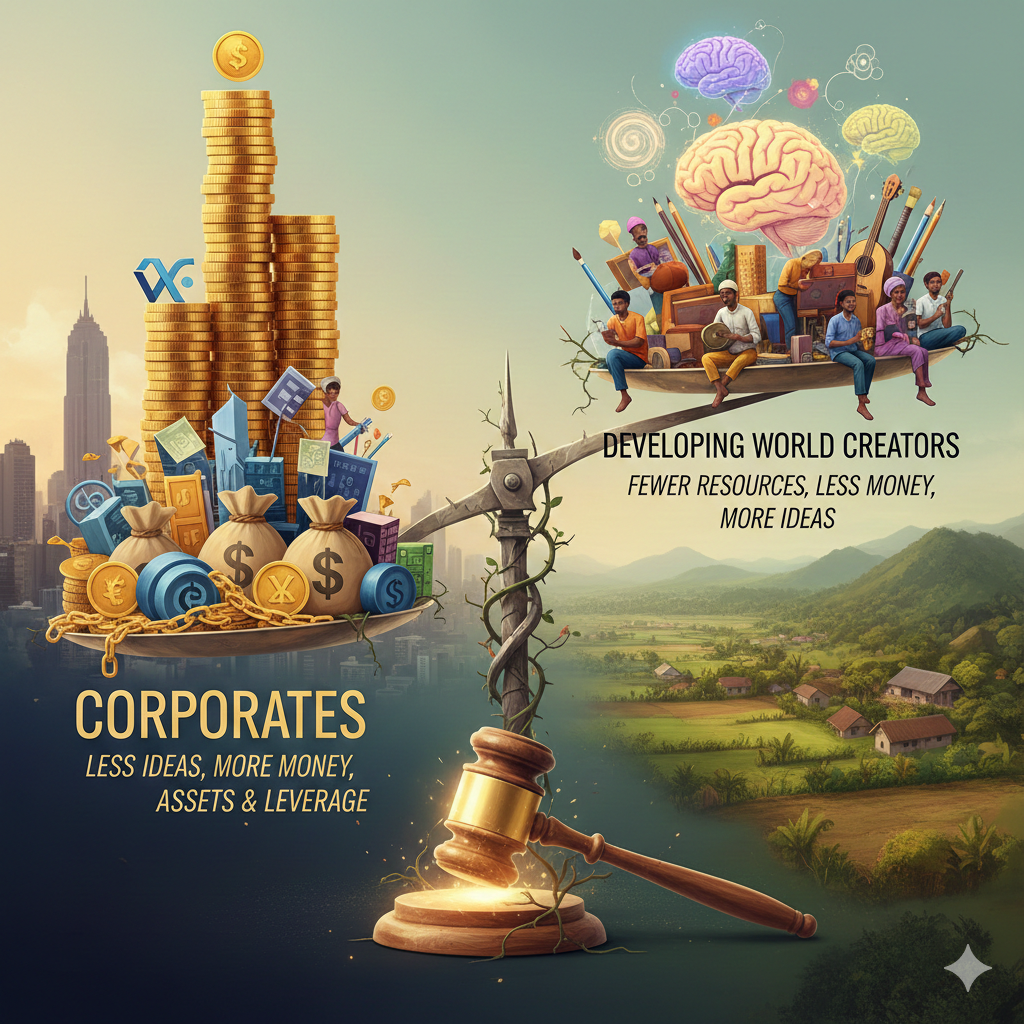
Across much of the developing world, the greatest barrier to innovation is not a lack of creativity or technical imagination, but an intellectual property landscape that remains structurally imbalanced. Over the past decade, the global technology ecosystem has shifted in ways that unintentionally marginalise emerging‑market innovators.
A decade ago, open innovation models were far more common. Around 2014 and earlier, many companies actively engaged with ideas from the public, sometimes even from independent bloggers and freelance communities. Platforms such as MyNokiaBlog demonstrated that external contributions could meaningfully influence corporate attention and product thinking.
Today, however, the environment has changed dramatically. Many major technology companies have adopted strict unsolicited‑idea submission policies, effectively preventing innovators from sharing concepts unless they are already within formal networks or employment pipelines. At the same time, opportunities such as global contests, conferences, fellowships, and grants increasingly require formal degree qualifications as entry criteria.
This shift disproportionately excludes innovators from developing regions, where academic pathways are often disrupted by poverty, conflict, statelessness, limited educational infrastructure, or forced career trajectories. As a result, a significant pool of talent is systematically filtered out before their ideas can even be considered.
Compounding this challenge, IP systems in many developing countries remain prohibitively expensive and difficult to navigate. Consultancy fees are high, public awareness is low, and the processes themselves are often inaccessible. These barriers prevent innovators from protecting or operationalising their ideas, even when their intention is not commercial gain but social impact. The global community continues to struggle with solvable problems partly because low‑cost, transparent, and accessible IP pathways are still not widely available.
The consequences are visible across sectors. For example, promising concepts in areas such as GPS usability and human‑technology interaction cannot be shared with dominant market players because leading platforms, such as major mapping services, do not accept external idea submissions. This dynamic reinforces a closed innovation loop that excludes voices from regions where technological creativity is abundant but structurally unsupported.
There is a growing need for regulators, policymakers, and global institutions to re‑examine how innovation ecosystems can become more inclusive. A fairer, more accessible IP environment, paired with open, merit‑based pathways for idea consideration, would unlock significant untapped potential and contribute to solving global challenges with solutions that already exist but lack a route to recognition.
The world is buzzing with excitement over advanced artificial intelligence and its promise to transform education. From instantly generating multi-page essays to delivering precise answers without combing through endless archives, AI is poised to streamline learning and lighten the load for educators. It’s a revolution of efficiency, speed, and accessibility, or so it seems.
Yet beneath the surface of this global celebration lies a sobering truth: AI may not be the great equaliser we hope for. In fact, it risks deepening existing divides, particularly the rural-urban gap and the entrenched social stratifications that separate people by access to resources.
According to analytical research and official statistics from reputable sources like the International Telecommunication Union (ITU) and Statista, approximately 62% of Africa’s population remained unconnected to the internet as of 2024. Internet penetration across the continent hovered between 38% and 43% in 2024–2025, far below the global average of 68%, making Africa the least connected region in the world.
In many Southern African countries, the majority of internet users are limited to platforms like WhatsApp, a narrow window into the digital world that excludes broader access to educational tools, research databases, and AI-powered learning platforms.
This digital divide hits students hardest. With internet access largely concentrated among the working class, many learners, especially in rural and underserved communities, are left without the connectivity needed to benefit from AI-driven education. While the rest of the world accelerates toward smarter, faster learning, African students remain tethered to outdated systems and limited resources.
A widening gap in educational outcomes, innovation capacity, and global competitiveness. AI is growing rapidly, but its adoption across Africa remains painfully slow. Without urgent intervention, the continent’s youth risk falling further behind, not because they lack talent, but because they lack access.
If AI is to be a tool for empowerment, it must be inclusive. That means investing in infrastructure, reducing data costs, and designing AI systems that work in low-bandwidth environments. It means recognising that innovation without equity is just another form of exclusion.
Africa’s future depends not just on catching up, but on reimagining how technology can serve its people, all of them.
In light of the recent turbulence incidents involving Singapore Airlines Flight SQ321 and Qatar Flight QR017, I propose a novel solution to enhance flight stability. By retrofitting civilian aircraft with anhedral wings, we can significantly mitigate the effects of turbulence. This wing design is adept at smoothing the ride due to its ability to distribute the aircraft’s weight effectively beneath the wing structure.
However, it’s important to consider the trade-offs of this design. For instance, the anhedral wing configuration presents challenges during emergency water landings, or “ditching.” A poignant example is the incident of US Airways Flight 1549 on January 5th, 2009. After a bird strike disabled the engines shortly after departure from LaGuardia Airport, the aircraft was successfully ditched in the Hudson River, and all passengers and crew were saved. In the aftermath, the passengers’ use of the dihedral wings for evacuation underscored the critical role these wings play in ensuring safety during unforeseen events.
Traditionally, dihedral wings have been the standard for wide-body commercial aircraft, such as those manufactured by Airbus and Boeing, due to their contribution to passive stability and safety. Conversely, anhedral wings are less common and typically found on select narrow-body passenger aircraft and large cargo planes, where they enhance stability and maneuverability.
The greatest inventors of the 21st Century will not be those who develop the greatest machines, for the era of Industrial Revolution and Computer Age have already commenced, but those who will invent sound policies and decision making strategies for the betterment of humanity.
Effective policy formulation is a crucial catalyst for achieving the United Nations Sustainable Development Goals (SDGs). As the 2030 deadline approaches, it is imperative to regularly evaluate and recalibrate our progress toward these objectives.
The adage “When elephants fight, the grass suffers” aptly illustrates the plight of children in the wake of parental incarceration. In many developing nations, countless youths endure severe poverty as a consequence of their parents’ imprisonment. It is estimated that each year, approximately 310,000 children in the UK and Wales are impacted by parental incarceration. Worldwide, millions of children have an incarcerated parent, with around 19,000 children living in prisons, typically with their mothers. The predicament is dire in Less Economically Developed Countries (LEDCs), where children from households with an imprisoned breadwinner face extreme deprivation, lacking essential education, healthcare, and nutrition. This deprivation is a primary driver of poverty, directly relating to SDG 1, No Poverty. Children deprived of basic education and necessities face a daunting path to recovery, often perpetuating a cycle of failure across generations.
Women raised in homes devoid of paternal presence are more vulnerable to various abuses, including sexual harassment and societal underrepresentation. Establishing a stable family environment becomes a formidable challenge. When mothers are incarcerated, the integrity of family structures is often compromised.
Without robust policies to support families in crisis, the battle against SDG 1 (No Poverty) may seem endless. Inclusion merits recognition as a standalone SDG. I propose the addition of several goals to the existing 17 SDGs, which merit consideration to ensure the continued focus on achieving the SDGs.
Based on a recent study by Gartner, companies allocate approximately 9.5% of their total annual revenue to marketing in 2022. This represents an increase from the 6.4% spent in 2021. While budgets have rebounded somewhat, they still fall short of pre-pandemic levels, which averaged around 10.9% between 2018 and 2020. Notably, financial services, travel and hospitality, and tech product companies have seen budget increases at 10.4%, 8.4%, and 10.1% of company revenue, respectively. However, consumer goods CMOs have experienced a slight decrease in spending, from 8.3% in 2021 to 8.0% in 2022, likely due to inflationary pressures and consumer confidence challenges. Despite these uncertainties, CMOs remain optimistic about future strategies and investments, emphasising the need for careful planning and adaptability.
Over the past decade, numerous industries have undergone radical transformations. However, the advertising sector has largely remained static, with a significant portion of ads being either ignored or blocked by ad blockers. In response, I am actively working on developing innovative approaches to deliver ads directly to targeted customers, thereby reducing overall spending by up to 35%.
The global eye health seem to be deteriorating with each generation. According to the World Health Organisation (WHO), the main conditions causing distance vision impairment or blindness are cataract (94 million), refractive error (88.4 million), age-related macular degeneration (8 million), glaucoma (7.7 million), diabetic retinopathy (3.9 million).
An estimated 1 billion cases has been systematically sampled to come up with the abovementioned statistics. However, there are various underreported cases, especially in the developing world where the healthcare systems are not up to standard.
The American Academy of Ophthalmology further states that more than 7 million Americans have low vision (defined as best-corrected visual acuity worse than or equal to 20/40 in the better-seeing eye.
I have devised two new groundbreaking technologies that will change the way the global health systems addresses eyesight problems. The concepts have undergone various stages and are expected to chsnge the face of the medical field.
It is another time of the year when the future of many youths crashes and plummets into the doldrums of poverty; when they look in the mirrors and see themselves changing — more wrinkles, less hair, fewer teeth… and less hopes for the future. In Africa, poverty begins to speak into the lives of people the very day they place their foot into the classroom, when their dreams are crushed and freely traded for a certificate.
Several thousands of youths across the country have been left with their lives hanging on the cliffs after the recent bombshell announcement of the GCSE and GCE results. Their talents have been buried under the result slips when their GCSEs and GCEs finally spoke and dictated the end of the world to them, the cessation of their worthiness in this highly competitive economy. While we celebrate the 30% that made it in last year’s GCSEs, the most important thing is to ask what the remaining 70% will do to make the ends meet in this ever hardening economy. This is a question only for the brave of heart and thick of skin.
On the African continent, many people die at 25 but are not buried until they are 70. The diminutive, sicky system of belief of using pass rates as a yardstick to measure students’ intelligence and ability has exposed a bone-chilling revelation of hard country girls brushing hairs of their faces with one hand and holding cigarettes on the other, with their male counterparts sitting on the bridges, taking drugs and shouting obscenities to the ladies passing by.
On the African soils, school determines what a student does in life; in the developed world, life determines what a student does in school. Our school system mainly focus on the emphasis of survival rather than the achievement of dreams. With the introduction of ECD a couple of decades ago, students now sit for their GCEs at 20. Some people have argued that spending more time in school will serve as a population growth control measure as this occupies the brains of the youngsters. However, it is unarguable that the same system has become the yeast that raises the flour of poverty by denying young people the chance to explore their abilities and venture into income generating activities at younger ages. In the developed world, a 15-year-old person will be playing soccer for a top club, with earnings of more than £100,000 a week. In Africa, an 18-year-old somebody has reached the legal age of becoming a parent; but is still waiting for their GCSE results to determine their next step in life, and has no clue on how to generate a single dollar per day. This clearly explains the poverty that has become ubiquitous like mosquitoes on the African soils.
This tragedy clearly shows lack of independence amongst African nations that gained political independence decades ago, but are still in the trenches fighting mirrors when their developed counterparts have shifted to the war of ideologies. Lack of proper representation of youths in decision-making processes in Africa is one main factor that has left the younger generations playing hide and seek with the long shadows of totalitarianism, confining them in the cage of ignorance while youth leaders and advocacy bureaus bury their heads in the sand.
For the benefit of the ears that always love to hear the truth, it is now the right time to accept that the world has since gone past the GCSE and GCE era and is now in the skills and competence era. Most African schools still exist in the medieval times of GCSEs and GCEs where students spend much of their time in the classroom drawing cows and labelling grasshoppers, instead of learning useful skills. Schools have become prisons where students’ dreams are guillotined and tossed into the grave. Since the colonial era, we have at many times been offered several counterfeits for true education, flipping the sides of the same puppetry coin. Young people grow accustomed to having outstanding passes instead of equipping themselves with valuable skills in a time most African schools are busy solving their guilty consciences with other people’s names.
Most African schools have been popularly known for trading scholars’ dreams for better pass rates, an economic turmoil engulfing the lives of the youths. The GCSEs and GCEs have become the schools’ propaganda megaphone that speaks poverty into the lives of people sitting on top of the world’s most fertile lands and richest mineral deposits. As a result, those with high pass rates are forced to bear the infirmities of the weak by being the supportive columns on which the lives of the dependant populations rest.
Now that the results have been released, Africans should now wake up to the call of reality and account for the highly talented individuals whose career limps were amputated by the GCSEs and GCEs. Africa now requires an imaginative approach that does away with pass rates and focuses on a student’s key abilities and how they can contribute towards the growth of the mainstream economy, which also reduces dependency ratios amongst the youthful workforce.
According to the 2023 statistical analysis by the Commons Library, 20% of children aged 8-16 had probable mental disorder, an 8% increase from 12% in 2017. NHS mental health director reports that the 2023 official NHS report reflected an increased demand for mental health services.
NHS England has rolled out 398 Mental Health Support Teams in educational institutions to provide early support young people with early to mild mental issues, supporting about 35% of the students. Mentalhealth.org.uk reports that mental health problems, particularly #depression, will be the leading cause for #mortality and #morbidity globally.
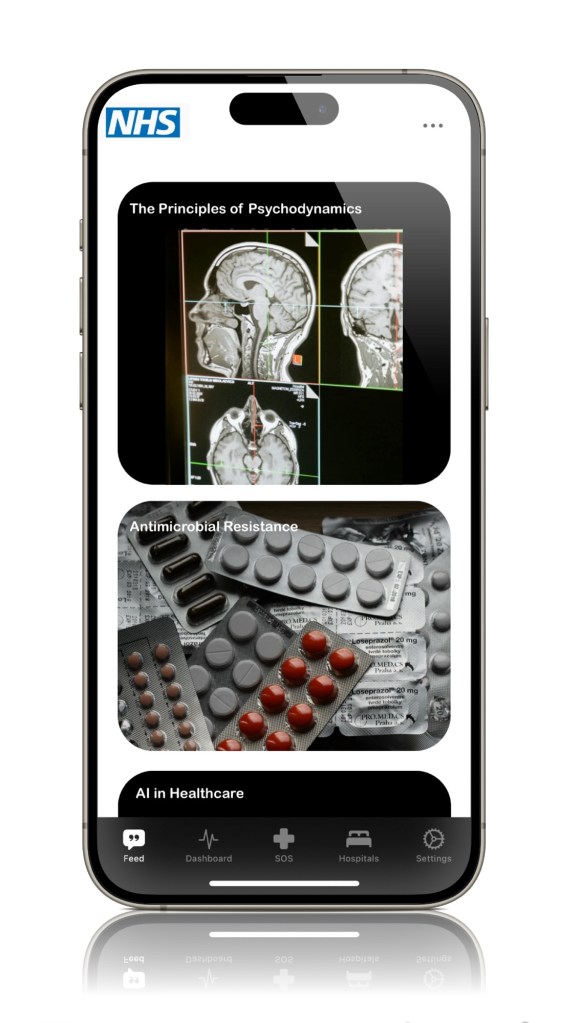
A preliminary study I recently conducted reveals a novelty approach we can utilise to mitigate the impact of mental health complications and other #medical conditions through the use of #artificialintelligence (#AI). The experimental application I designed shows how the NHS can harness powerful technologies and data-driven solutions to effect a change in the clinical approach to address mental healthcare challenges. Moreover, the technology has proven to work perfectly across all other medical sectors and can be a pivotal part of the future of the medical sector. This systematic approach is expected to reduce the financial requirements and human resource demands by at least 75% in the next few years, reducing the global spending on healthcare demands.
Rewind to the period between 2009 and 2011, and then fast-forward back to 2023. The face of the technological landscape has completely changed and is no longer as it used to be – highly competitive. Between 2009 and 2011, some of the most remarkable innovations were developed as far as mobile technology is concerned. Iconic smartphone brands such as Nokia, HTC and BlackBerry amongst other popular manufacturers, and of course the legendary Apple iPhone, have played a significant role in the development of innovations that have changed the lives of the people and the world at large. The global community of freelancers has brought a positive growth to the world of technology. MyNokiaBlog has been one such platform where innovators gathered to deliberate on technological issues affecting the mobile industry and contribute to the transformation of the global technological landscape.
While research studies have indicated that innovations have got lifetimes, it is the best time of the century Apple has to take greater strides to shield and elongate the life of its iconic smartphone. Following the untimely demise of the iPod, the iPad is also on the verge of collapse. According to the statistical analysis by crn.com, Apple’s iPad revenue declined 10% year-over-year to 6.4B. The site also states that according to Maestri, iPad sales suffered for similar reasons to the Mac. IPhone sales have also been declining over the past years and may continue to decline if the most pressing issues are not addressed.
The current design path Apple is being pressured to take has several negative implications that will push the tech giant into losing some its sales if complementary mitigation efforts are not invested. For years, Apple has been touted as a flamboyant for its uniquely designed features, including a proprietary lightning charger, which the tech giant has been pressured to abandon for USB Type-C. Moreover, Apple is being pushed to accept the side loading of applications, which will further diminish its prestige that used to distinguish the iPhone from the rest of its competitors. Apple has for years been the pioneer of most technologies in the mobile manufacturing space, including the first successful launch of a touchscreen phone, the first device with a full-display front and the dynamic island. While these features now exist nearly on every phone, it has become almost impossible to pick out the iPhone from a pool of different other smartphones.
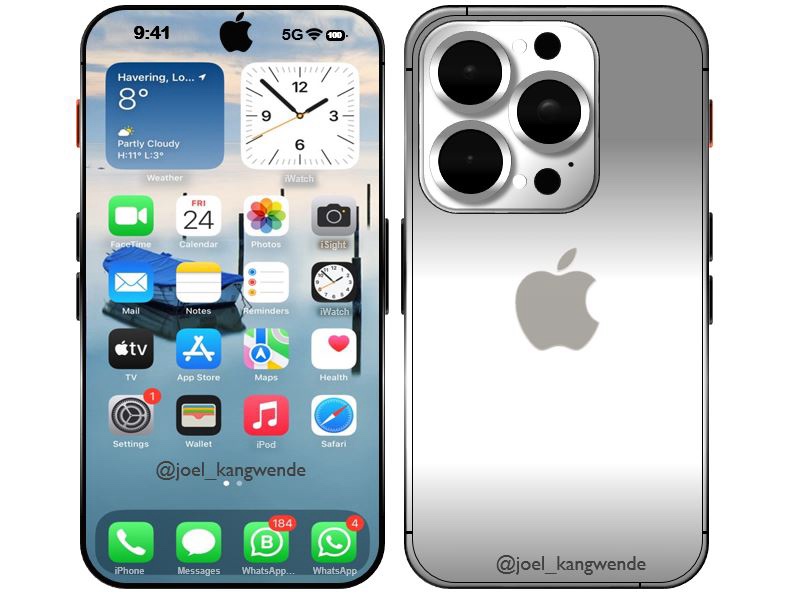
While the tech giant does not accept unsolicited ideas from the outside world, I have persisted over the years on hinting the company to develop an Apple-shaped hole punch logo, which would make the device stand out from the rest of its competitors who have already adopted the dynamic island technology.
Considering the prevailing technological climate, the iPod succumbed to its untimely demise, and the iPad may follow suit if the current innovation challenges are not addressed. Speculations based on technological predictions have interpreted the current situation as the end of the smartphone era, but the replacement of smartphones with wearables can be described as a premature rush into the next generation of technologies while the smartphone era has not yet lapsed, as proved by the continued acceptance and adoption of foldable smartphones. The major changes that have been made to the iPhone are pushing the company to the most uncomfortable edges of the market, exposing the iPhone to the vulnerabilities of intense competition from Google’s Pixel and Samsung’s Galaxy flagships. Apple needs to understand that Google has a strong advantage of a vibrant market share in the software industry, and can leverage on the preloading of its widely used services such as YouTube, Google Maps, artificial intelligence systems and other platforms to attract users towards its Pixel devices. On the other hand, Samsung has taken an upper hand on the consumer electronics market, which has sandwiched the iPhone between two very powerful technology behemoths. Continued pressure on the iPhone to abandon some of its proprietary technologies may lead to the continued slumping of the company’s sales if no new technologies are introduced, especially on the hardware side, since software can be easily upgraded.
According to TechRadar, the Big Three companies have seen their shipments falling more than 10% between Q2 2022 and Q2 2023, and this is the eighth consecutive quarter of year-on-year decline, suggesting a downward spiral for the industry. The declining smartphone sales suggest a hint that needs to be taken seriously. For the past 3-5 years, there have been minimum differences between successive smartphone models and smartphone brands as well, which has greatly lowered customers’ curiosity about new devices. That brings us to a conclusion that the declining overall smartphone sales have been due to the declining pace of innovation.
One of the major problems, that have continued to push the iPhone to the most uncomfortable edges of the market is an overlooked branding issue that has since lost its course. The tech giant could have maintained its iPhone model number in perfect match with the iOS and chipset versions, avoiding bigger numbers that go beyond iPhone X, which is a branding mistake Samsung has also made on its Galaxy S smartphone series, with Google having done it on its Android versions – hopefully the Pixel won’t go the same way. When using numbers as product variants, they are better maintained between 1 and 10, then start over again with a new series, such as iPhone 1 to 10 and then iPhone Air 1 to 10. That would give the company an advantage in terms of how customers pronounce its products’ names, and iPhone Air 2 would sound better than iPhone 36 or iPhone 42.
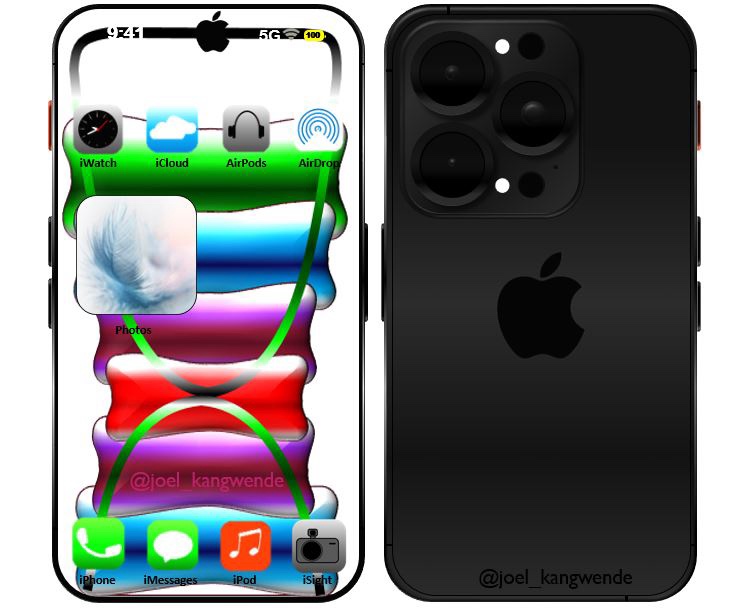
Regarding the software part of the phone, the iOS needs a complete overhaul that brings new functionality and a whole new look, especially for the upcoming iPhone models only. Upgrading the software without major hardware upgrades is an ineffective approach since the older smartphone models will just upgrade to the same software versions, which means some customers will choose to remain with the older models and simply run a software upgrade, an approach which has been common for years, as customers run out of curiosity for new devices. For the upcoming models, Apple better runs a complete overhaul and allow the newer iPhone models to run a parallel upgrade that has a whole new range of performance and functionality. That means iOS18 will have to be a completely new software, with different variants of the software, one for older iPhones and a parallel upgrade that will be available only for the upcoming iPhones. Software programs need to be overhauled and the names need to be updated. In my previous renderings, I have provided a whole new range of terms; Phone to iPhone, Music to iPod, Camera to iSight; and an addition of other quick access apps such as iCloud and AirPod apps. I have done a completely new interface which has not been show on the renderings, which is supposed to bring a new way regarding how people interact with iPhones, for the first time since the launch of the iPhone.
However, besides software upgrades, there is a lot the tech giant can do in terms of differentiating the hardware design,l in different iPhone variants, besides differences in size.
With the continuously growing market and adoption of generative artificial intelligence technologies, the need for automation in highly specialised industries such as the design industry will undoubtedly continue to increase over the next years. After successfully testing Microsoft ‘s Powerpoint as a viable tool for creators, I have delved deeper into researches on how #AI can be best implemented in the designing industry to reduce the workload for task completion.
The initial work was based on trying to bring up automotive design techniques through simple tools that do not require much effort, allowing even entry-level designers to clearly express their ideas and commercialise their work. This research was also aimed at developing low-cost design tools that are compartible with affordable computer systems that are power efficient, helping reduce the global demand for energy, lowering the carbon footprint by up to 35%.
The second test was conducted using #Airt and the #DALL•E 3 powered #Bing search engine AI image generator. Researches have clearly highlighted that grey areas that need to be addressed to improve AI algorithms in the design industry.
This combined research has produced results that have necessitated me to conceptualise the next generation AI-powered that will maximise CAD efficiency and allow content creators do their work from their palms using handheld devices, and captioned is part of the work. According to The Business Research Company, the specialised design industry market size gree from $142.78 billion in 2022 to $156.19 billion in 2023 at a compound annual growth (CAGR) of 9.4%, which is an opportunity to grab for design software developers.