iPhone Feature Improvements
• Pinch and zoom and edit screenshots
• Use biometrics or passcode to view hotspot password
• Switch off networks from the control panel
• Switch LiDAR scanner and flashlight positions to improve lighting
• Apple-shaped hole punch
• Landscape mode for UI
• New icons
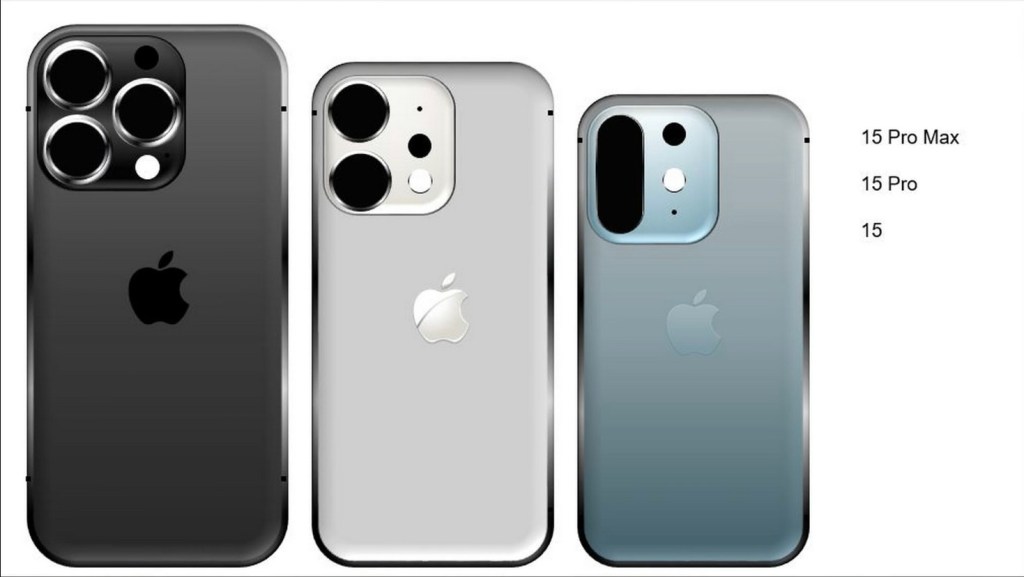
Apple might need to reconsider its iPhone design, close to two decades after the official launch of the first ever Apple iPhone. The company managed to maintain a good trajectory and uniformity up to the iPhone 4, and lost this uniformity with the introduction of the iPhone 4S model. During those times, the iPhone model would resonate well with the version of the operating system software and the hardware as well. With the much awaited release of the iPhone 15, Apple should have been working on the release of the iPhone 15 together with iOS15 as well as Apple A15 chipset, so that the pattern would be uniform.
However, the traditional iPhone would sell as a single version, or two at most, the original version and its Plus model. This has been a dramatic shift from the Nokia N97 times when a flagship device would have a ‘Mini’. Apple was supposed to have maintained the Mini and or Plus tradition. The iPhone X was a complete game changer, which marked the beginning of a new revolution within the smartphone industry. However, it was supposed to mark the end of the first iPhone era. A different approach would be the launch of a new iPhone series such as iPhone Air 1 to X, and start over again, instead of having big numbers such as 15. One can wonder where these bug numbers are leading us; obviously to even bigger numbers such as iPhone 36, iPhone 72, which sounds queer. The tech giant could have utilised alternative naming such as iPhone Air 1 to X.
Considering the current setting, Apple seeks to losing a considerable market share to its competitors due to something simple the company has overlooked for quite long. The entry-level iPhones are becoming ‘too ordinary’. This means the phones are lacking some basic features we can find on alternative but cheaper devices from the company’s competitors. A fair comparison would rule out the alternatives to be way better than Apple’s entry-level devices that sound like overpriced gadgets. Also, the tech giant seem to be using too many colours on it’s devices.
The main difference between entry-level iPhones and the Pro iPhones are mainly pronominal on cameras and chipsets, and sometimes on the hardware, depending on the version. For example, the iPhone 11 was way better than it’s Pro, since it came with a bigger display panel and battery. The Pro only had and advantage of a better pixel density and display resolution as well as a Pro Camera, otherwise there were no other selling points to attract customers. Considering the iPhone 14 Series, Apple made a huge mistake by producing a big entry-level device. An entry-level devices should be an entry-level device, and is not expected to have a bigger display than its Pro model. The iPhone 14 Plus was not necessary. However, the other mistake Apple is making is having too many phones on its single line up. The company should reconsider producing just two, or three variants at most, per model. Instead of having a Plus at one time, and a Max at another, and a Pro (Max) at another one, Apple should stick to just one strategy to prove to the market how organised they are. The company should also have the mid-level device as the official one, for example, iPhone 15. The phone should then come with a Mini model and a Plus/Pro/Max, otherwise having iPhone 15, 15 Pro and 15 Pro Max can be a better approach.
However, Apple should produce all devices with that aesthetic design of the Pro body, which features a professional finish and touch, which a matte body and dull icon design. The camera system should come with a wide, ultra-wide and telephoto pieces, with an additional time-of-flight (ToF) depth sensor such as the one use by Huawei and Samsung. The next model should have mare pixels and bigger resolutions and an ultrasonic depth sensor, leaving the LiDAR technology only for the Pro model. If the entry level uses 12MP cameras, then the mid-level should have more pixels, around 40MP. The Pro model should have even bigger, up to 120MP.
Most of the customers do not understand technology to the same level as the designers and manufacturers. They believe more pixels means more quality. Thus, the designers need to come up with designs that have evident visual differences to convince the buyer that the devices are different. That’s why software designers needs to revamp UIs instead of just debugging and doing a few amendments. Also, Apple needs to switch the positions of the LiDAR scanner and camera flash, so that the latter can clearly illuminate ground in portrait photo frames.
The three models also need to be equipped with different biometric systems; one with onscreen Touch ID, Face ID, with the Pro model featuring all of them. The notch designs, display size, pixel density and resolution should be different on all the iPhones. This should also be done on the processor, RAM and even storage.
This strategy will greatly improve customers’ buying patterns and improve Apple iPhone’s share of market.
IPhone 15/15 Pro/15 Pro Max
• 5.8”/6.1”/6.71” XDR OLED, 60/120/120Hz.
• Pill-shaped hole punch/i-shaped hole punch/Apple logo-shaped hole punch.
• 326/458/501 PPI, Dolby Vision, HDR10
• 12MP wide + 12MP ultra wide + 12MP 2x telephoto, dual flash/40MP wide-ultra wide + 12MP 5x telephoto + 12MP ToF depth sensor, triple flash/108MP wide-ultra wide + 40MP 10x telephoto + 20MP night vision camera, LiDAR depth scanner, quad flash; panorama, motion-tracking, HDR.
• 12MP + infrared camera/20MP + infrared camera/40MP + 12MP infrared night vision camera + LiDAR advanced biometric scanner.
• Onscreen Touch ID, Face ID, Onscreen Touch ID + Face ID.
• 4GB/6GB/8GB RAM, 256GB/512GB/1TB
• Hexa-core/quad-core + dual core/hexa-core + dual -core 4nm CPUs.
• Quad-core GPU + 1GB/quad-core + 2GB GPU/hexa-core + 2GB GPU.
• Shiny white, space grey/matte rose gold, grey, black, silver/matte silver, gold, black.
• USB Type-C reversible connector/magsafe/magsafe.
• Side, mute, volume/side action, volume/solid-state side, action, volume.


